
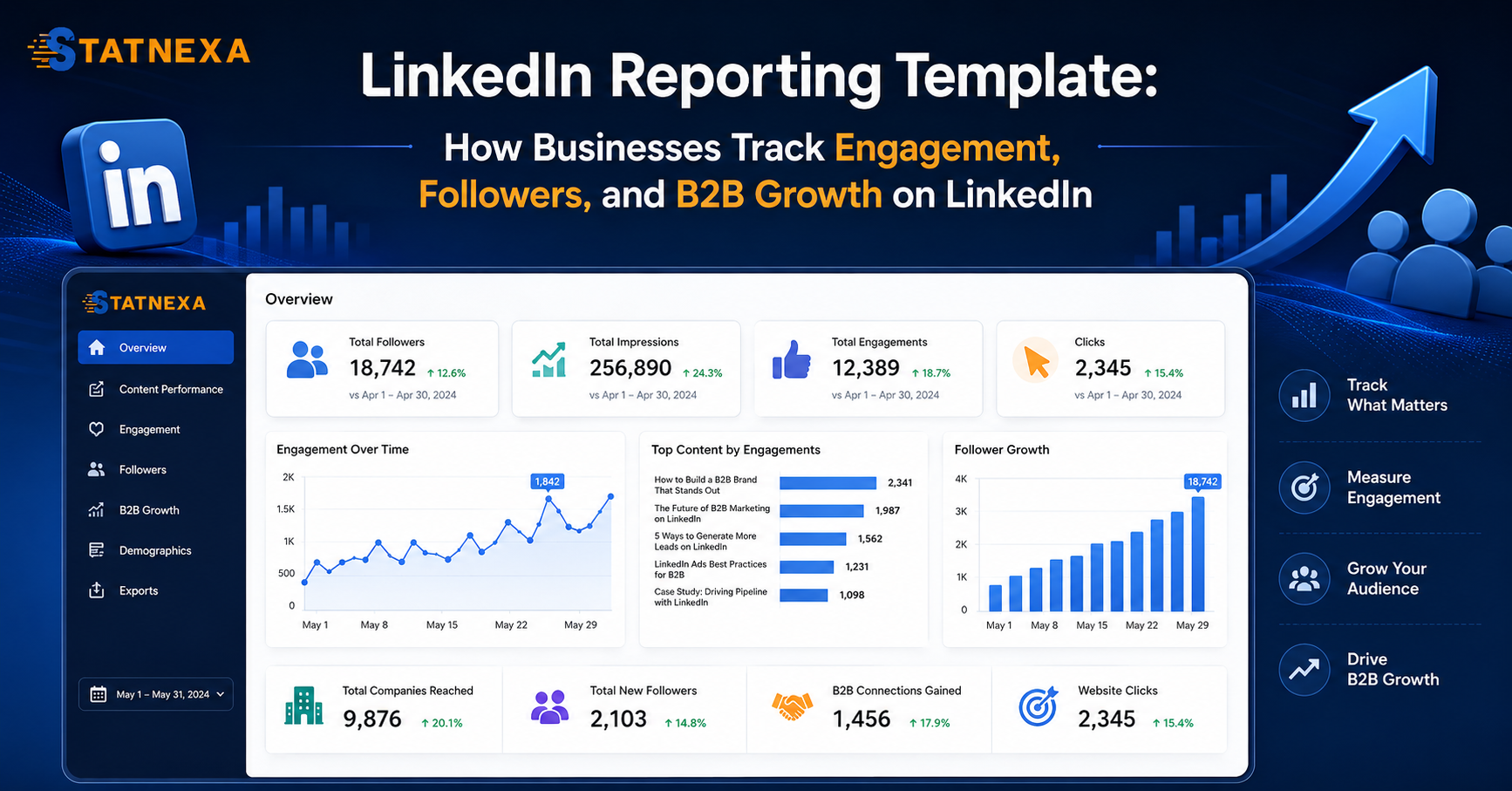
LinkedIn has become one of the most important platforms for businesses looking to build authority, grow professional audiences, strengthen brand credibility, and generate meaningful business relationships.
Unlike traditional social media platforms that focus heavily on entertainment and casual engagement, LinkedIn is built around professional networking, industry conversations, thought leadership, and business growth. This makes it especially valuable for SaaS companies, B2B organizations, recruitment firms, agencies, consultants, and brands looking to connect with decision-makers.
Today, businesses use LinkedIn to share company updates, educational content, industry insights, employer branding initiatives, case studies, and thought leadership posts.
However, growing successfully on LinkedIn is not simply about posting more content.
Businesses also need to understand:
• Which posts generate engagement
• Why followers increase or decline
• Which content formats perform best
• How audiences interact with business pages
• Which posts influence clicks and business interest
• Whether LinkedIn efforts contribute to long-term brand growth
This is where LinkedIn reporting becomes extremely important.
Many businesses invest time and resources into LinkedIn marketing but struggle to clearly understand performance. A page may gain followers but receive weak engagement.
Another business page may attract fewer followers but generate significantly stronger post interactions and professional conversations.
Some content may quietly outperform others by generating stronger impressions, clicks, and audience engagement without businesses fully recognizing its impact.
Without centralized reporting, these insights often remain hidden.
To solve this challenge, Statnexa provides the LinkedIn Reporting Template, a centralized reporting dashboard designed to help businesses monitor followers, engagement, impressions, clicks, post interactions, and content performance inside one reporting environment.
Instead of manually reviewing fragmented LinkedIn analytics, businesses can access meaningful performance insights through one centralized dashboard.
Why LinkedIn Reporting Matters More Than Ever
LinkedIn has evolved far beyond a professional networking website.
It has become one of the strongest platforms for business visibility and B2B marketing.
Businesses increasingly rely on LinkedIn to:
• Build brand authority
• Generate leads
• Attract talent
• Strengthen trust
• Share expertise
• Engage professional audiences
At the same time, competition for visibility continues increasing.
Thousands of businesses publish content every day.
This means businesses can no longer rely on assumptions when measuring performance.
Without proper reporting, marketers often struggle to answer important questions such as:
• Why are followers increasing or slowing down?
• Which posts generate the strongest engagement?
• Which content formats perform best?
• Why do impressions increase without stronger interaction?
• Which posts drive clicks and business interest?
• How does video content perform compared to other formats?
Without clear answers, businesses often continue publishing content without understanding what actually contributes to growth.
This makes LinkedIn reporting extremely valuable for:
• SaaS companies
• B2B organizations
• Agencies
• Consultants
• Recruitment businesses
• Personal brands
• Corporate companies
Businesses that monitor LinkedIn performance properly gain stronger visibility into what drives audience engagement and professional growth.
Why Followers Alone Do Not Tell the Full Story
One of the biggest mistakes businesses make with LinkedIn marketing is focusing only on follower count.
Followers matter.
But followers alone do not define success.
For example:
A LinkedIn page may gain hundreds of followers every month.
At first glance, performance appears strong.
However, deeper analysis may reveal:
• Engagement remains weak
• Click activity stays low
• Content interaction declines
• Audience participation remains limited
Meanwhile, another page with a smaller audience may consistently generate meaningful conversations, stronger engagement, and higher click activity.
This happens because LinkedIn success depends on more than audience size.
Businesses also need visibility into:
• Engagement quality
• Content performance
• Audience behavior
• Professional interaction
• Click activity
• Brand visibility
Instead of asking:
“How many followers do we have?”
Businesses should ask:
“Are audiences meaningfully engaging with our content?”
That shift changes LinkedIn strategy completely.
How LinkedIn Reporting Helps Businesses Improve Performance
Successful LinkedIn growth depends on understanding what content actually resonates with professional audiences.
Businesses that monitor LinkedIn performance consistently can identify opportunities faster and improve engagement more effectively.
LinkedIn reporting helps businesses understand:
• Which posts generate stronger engagement
• Which content formats perform best
• Which posts drive clicks
• How audiences interact with company pages
• Which content influences follower growth
• Which content deserves more investment
These insights help businesses improve:
• Content strategy
• Brand positioning
• Thought leadership efforts
• Audience engagement
• Professional credibility
For example:
Educational posts may consistently outperform promotional content.
This insight signals an opportunity to invest more heavily in thought leadership content.
Similarly, video posts may generate significantly stronger engagement compared to standard company updates.
These insights help marketers optimize LinkedIn strategies using real audience behavior instead of assumptions.
The LinkedIn Reporting Template simplifies this process by centralizing major LinkedIn KPIs into one reporting dashboard.
Which LinkedIn Metrics Actually Matter?
Social reporting often becomes overwhelming when businesses focus on too many disconnected numbers.
The key is understanding which metrics actually contribute to visibility, engagement, and long-term growth.
The LinkedIn Reporting Template focuses on meaningful performance indicators that help businesses improve professional engagement and audience growth.
Followers and Audience Growth
Follower growth remains an important indicator of professional brand expansion.
Tracking Followers helps businesses understand:
• Audience growth trends
• Brand awareness performance
• Community expansion
• Professional visibility
However, follower growth becomes significantly more valuable when analyzed alongside engagement.
Because follower growth without interaction often signals weak audience quality.
Businesses should focus on building engaged professional communities rather than vanity numbers.
Impressions and Content Visibility
Visibility remains an important part of LinkedIn performance.
Tracking Impressions helps businesses understand how often content appears in front of audiences.
Growing impressions often signal:
• Better content reach
• Stronger visibility
• Improving brand awareness
However, visibility alone does not guarantee meaningful interaction.
A post may generate strong impressions while receiving limited engagement.
This is why impressions become significantly more valuable when analyzed alongside engagement and clicks.
Likes, Comments, and Engagement
Engagement remains one of the strongest indicators of content effectiveness.
Tracking Likes, Comments, and overall Engagement helps businesses understand:
• Content relevance
• Audience interaction quality
• Professional interest
• Thought leadership effectiveness
Comments often signal deeper audience engagement than likes alone.
Businesses can use these insights to better understand what content resonates most with audiences.
Follower Engagement Rate
Follower growth matters.
But engagement rate matters even more.
Tracking Follower Engagement Rate helps businesses understand:
• Content effectiveness
• Audience interaction consistency
• Post quality
• Community involvement
Higher engagement rates often signal stronger content alignment and more relevant messaging.
Businesses can identify successful content patterns and improve future performance.
Clicks and Business Interest
Clicks reveal whether audiences take meaningful action after interacting with content.
Tracking Clicks helps businesses understand:
• Website interest
• Lead generation opportunities
• Audience curiosity
• Business engagement
Higher click activity often signals stronger audience intent and greater business interest.
This insight becomes especially valuable for businesses using LinkedIn to drive leads or website traffic.
Video Views and Engaged Viewers
Video content continues becoming more important on LinkedIn.
However, not every video performs equally.
Tracking Video Views by Videos and Engaged Viewers by Videos helps businesses understand:
• Which videos attract attention
• Which content formats perform strongest
• Audience viewing behavior
• Video engagement quality
Businesses can identify stronger-performing video strategies and optimize future content accordingly.
Why Businesses Need LinkedIn Reporting Now
Professional competition continues increasing across LinkedIn.
Businesses that fail to monitor performance properly often struggle with:
• Weak engagement
• Slow follower growth
• Limited visibility
• Poor content performance
• Missed optimization opportunities
Businesses using centralized LinkedIn analytics gain a major competitive advantage.
They can:
• Improve engagement faster
• Understand audience behavior
• Optimize content strategically
• Strengthen professional authority
• Increase business visibility
Businesses that understand audience engagement faster often grow faster.
How Statnexa Helps Businesses Improve LinkedIn Reporting
Statnexa helps businesses simplify LinkedIn analytics through centralized dashboards designed for SaaS companies, B2B organizations, agencies, consultants, recruiters, and growing brands.
The LinkedIn Reporting Template helps businesses:
• Monitor follower growth
• Track engagement and impressions
• Analyze clicks and audience behavior
• Measure follower engagement rate
• Understand video performance
• Identify stronger-performing content
Instead of manually collecting fragmented LinkedIn data, businesses can instantly access centralized insights through one dashboard. The LinkedIn Reporting Template helps businesses transform social media performance data into stronger engagement, smarter content decisions, and long-term professional growth