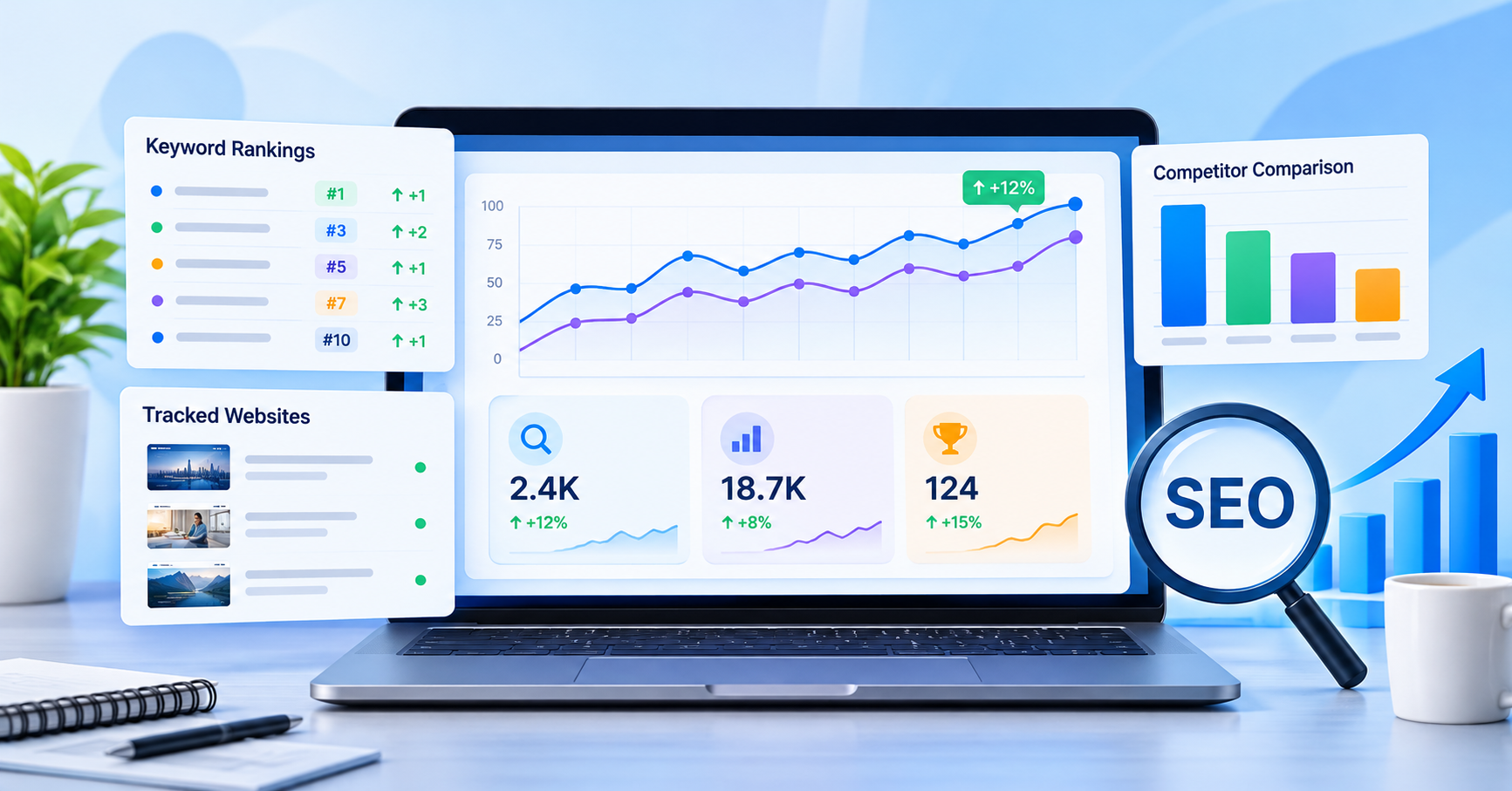
Managing SEO for one website is relatively simple. But what happens when a digital marketing agency manages 10, 20, or even 50 client websites?
Every client has different target keywords, competitors, locations, and business goals. Agencies need to monitor keyword positions, check ranking changes, analyze competitors, and prepare performance reports regularly. Doing all this manually can take hours every week.
This is where agency rank tracking becomes important.
In 2026, tracking keyword positions is not just about knowing whether a website ranks on Google’s first page. Agencies also need to understand search visibility, organic traffic, competitor movements, and whether their SEO efforts are helping clients achieve business goals.
A structured rank-tracking process helps agencies make better SEO decisions, identify ranking opportunities, and communicate campaign progress more clearly.
In this guide, we’ll explain how agency rank tracking works, how to monitor multiple client websites, which features matter in rank-tracking software, and how agencies can improve their SEO performance reporting.
Table of Contents
- What Is Agency Rank Tracking?
- Why Is Rank Tracking Important for SEO Agencies in 2026?
- How to Monitor Keyword Rankings for Multiple Clients
- How to Track Competitor Keyword Rankings
- Important Features to Look for in Agency Rank Tracking Software
- How to Measure SEO Performance Beyond Keyword Rankings
- Best Practices for Managing Rank Tracking Across Multiple SEO Clients
- How StatNexa Helps Agencies Simplify SEO Performance Reporting
- Frequently Asked Questions
- Conclusion
1. What Is Agency Rank Tracking?
Agency rank tracking is the process of monitoring keyword positions and search visibility for multiple client websites. It helps SEO agencies understand how their clients’ websites perform in search engine results pages (SERPs) for selected keywords.
Unlike individual website tracking, agency rank tracking involves managing several SEO campaigns at the same time. Each campaign may target different keywords, industries, locations, and competitors.
For example, imagine a digital marketing agency working with three clients:
- A real estate company targeting property-related keywords in New York.
- An ecommerce store targeting product keywords across the United States.
- A local dental clinic targeting location-based searches in Chicago.
The agency needs to monitor different keyword groups and evaluate each website’s performance separately.
A rank-tracking process helps the agency understand which keywords are improving, which are losing positions, and where new opportunities exist.
It also gives SEO professionals a clearer picture of campaign progress instead of depending on occasional manual Google searches.
In simple terms, agency rank tracking helps SEO teams manage keyword performance across multiple clients without losing track of individual campaign goals.
2. Why Is Rank Tracking Important for SEO Agencies in 2026?
SEO has become more competitive, and agencies need reliable ways to understand whether their strategies are working.
Publishing content, building backlinks, and optimizing website pages are important activities. However, agencies also need to measure what happens after those activities are completed.
Here are some reasons why rank tracking matters.
Measure keyword performance: Agencies can identify whether targeted keywords are moving toward the first page or losing visibility. This helps SEO teams understand which strategies are producing positive results.
Identify ranking drops: A sudden decline in keyword positions can indicate stronger competition, changes in search results, technical issues, or content that needs improvement. Monitoring rankings helps agencies investigate these changes earlier.
Show clients measurable progress: Clients want to understand what their SEO investment is achieving. Ranking reports help agencies explain keyword improvements, search visibility, and areas that need more attention.
Discover new opportunities: Tracking keyword performance can reveal keywords sitting just outside the first page. These may be opportunities for content updates, internal linking, or improved on-page optimization.
Make better SEO decisions: Instead of making decisions based on assumptions, agencies can use ranking trends alongside traffic and conversion data to prioritize their next actions.
For example, if an agency notices that a client’s service page has moved from position 18 to position 9, it can investigate what contributed to the improvement and decide how to strengthen the page further.
3. How to Monitor Keyword Rankings for Multiple Clients
Monitoring several websites requires an organized process. Without a clear system, agencies can easily mix up client keywords, overlook ranking changes, or spend too much time preparing individual updates.
Here is a practical approach.
Step 1: Create Separate Projects for Each Client
Start by organizing every client website into a separate project. This makes it easier to manage keyword lists, website information, competitors, and campaign performance.
For example, an agency managing 15 websites should maintain separate tracking records for each client rather than combining all keywords into one spreadsheet.
Step 2: Select Relevant Target Keywords
Choose keywords based on each client’s products, services, audience, and business goals.
Include a combination of:
- Primary keywords targeting important products or services.
- Long-tail keywords targeting specific customer searches.
- Local keywords targeting particular cities or regions.
- Commercial keywords attracting potential buyers.
Avoid tracking hundreds of unrelated keywords simply to increase the size of a report.
Step 3: Track Location-Based Rankings
Search rankings can vary depending on the user’s location. A keyword may perform differently in New York, Los Angeles, Toronto, or London.
For agencies working with local businesses, location-based tracking is especially useful.
Step 4: Review Keyword Position Changes
Check keyword movements regularly and compare current positions with previous reporting periods.
Pay attention to keywords that have improved, declined, or remained unchanged for a long time.
Step 5: Organize Client Performance Reports
Prepare separate reports showing keyword positions, ranking trends, organic traffic, impressions, and other relevant SEO metrics.
This gives clients a clearer understanding of their campaign progress and helps agencies explain what needs attention next.
4. How to Track Competitor Keyword Rankings
Monitoring your client’s keyword positions is important, but understanding what competitors are doing can provide additional SEO opportunities.
Competitor keyword tracking helps agencies identify which search terms competing websites are targeting and where those websites are gaining visibility.
For example, suppose an SEO agency manages a marketing agency website targeting the keyword “digital marketing services.”
After reviewing the search results, the agency discovers that three competing websites are also ranking for related keywords such as “digital marketing company for small businesses” and “online marketing services for startups.”
These findings can help the agency identify relevant content opportunities that may not have been included in the original SEO strategy.
Here are some practical ways to monitor competitors:
- Identify direct competitors: Find websites competing for the same target keywords and audience.
- Analyze keyword gaps: Discover relevant keywords for which competitors rank but your client’s website does not.
- Monitor ranking movements: Check whether competitors are gaining or losing positions for important search terms.
- Review competing content: Understand what topics, landing pages, and content formats are performing well.
- Discover new opportunities: Use competitor insights to improve existing pages and plan new content.
Remember that competitor rankings should guide your SEO decisions, not become the only measure of campaign success.
5. Important Features to Look for in Agency Rank Tracking Software
Choosing the right rank-tracking software can make a significant difference when managing multiple SEO campaigns. Agencies should look beyond basic keyword position monitoring and consider tools that help organize data, analyze performance, and communicate results to clients.
Here are seven important features to consider.
1. Multiple Website Tracking
Agencies rarely work with just one website. They need a solution that makes it easier to organize different client projects and monitor their SEO performance separately.
Multiple website tracking helps SEO teams manage several campaigns without switching between different spreadsheets or manually organizing keyword data.
2. Location-Based Rank Tracking
A keyword can have different rankings depending on the city, region, or country being targeted.
For example, a local SEO agency managing businesses in New York and Los Angeles needs to understand how each website performs in its target market.
Location-based tracking helps agencies evaluate local search visibility and identify areas where clients may need additional optimization.
3. Competitor Monitoring
Understanding competitor performance helps agencies discover keyword opportunities and identify changes in the competitive landscape.
Look for tools that allow SEO teams to compare keyword positions, review competitor visibility, and identify potential content gaps.
4. Keyword Position History
Checking rankings once does not provide enough information about SEO performance.
Keyword position history helps agencies compare ranking movements over weeks and months. It also makes it easier to identify consistent improvements, sudden declines, and keywords that need attention.
5. Automated SEO Reporting
Preparing individual reports for every client can become a repetitive task.
Automated SEO reporting helps agencies reduce manual work by collecting supported performance data and presenting it in organized reports.
This gives SEO professionals more time to focus on campaign improvements instead of spending hours formatting spreadsheets.
6. White-Label Reporting
Agencies often want their reports to reflect their own brand rather than the software provider’s identity.
White-label reporting allows agencies to present performance information using their branding, making reports more consistent and professional when communicating with clients.
7. Performance Dashboards
A well-organized dashboard helps agencies review important performance metrics without searching through multiple reports.
Look for dashboards that allow teams to monitor relevant SEO and marketing metrics, customize reporting views, and share performance information with clients.
The best solution depends on the agency’s workflow, number of clients, reporting requirements, and available integrations.
6. How to Measure SEO Performance Beyond Keyword Rankings
Keyword rankings are important, but they do not tell the complete story of an SEO campaign.
A website can rank on the first page for several keywords and still generate very few leads or sales. Similarly, a website may experience an increase in organic traffic without attracting the right audience.
That is why agencies should combine ranking data with other SEO performance metrics.
| SEO metric | What agencies should measure |
|---|---|
| Organic Traffic | Visitors arriving through unpaid search results |
| Search Impressions | How often website pages appear in search results |
| Click-Through Rate (CTR) | Percentage of impressions that generate clicks |
| Keyword Rankings | Positions of targeted keywords in search results |
| Organic Conversions | Leads, purchases, or enquiries from organic visitors |
| Landing Page Performance | Which pages attract and engage organic visitors |
| Search Visibility | How visible a website is across its tracked keywords |
For example, an agency may notice that a client’s organic traffic increased by 25% over the previous reporting period. However, after reviewing conversion data, the team discovers that enquiries have remained unchanged.
This means the agency needs to investigate whether the additional traffic is relevant to the client’s business goals.
Google Search Console can help agencies review clicks, impressions, CTR, and search queries. Google Analytics 4 can provide additional information about website engagement and conversions.
Combining these data sources gives agencies a more complete understanding of SEO performance.
The main objective should not be getting better rankings alone. It should be turning search visibility into meaningful business results.
7. Best Practices for Managing Rank Tracking Across Multiple SEO Clients
Managing multiple SEO campaigns requires consistency. A structured process helps agencies avoid reporting mistakes, identify opportunities, and maintain better communication with clients.
Consider these best practices:
1. Create a separate keyword strategy for every client. Every business has different goals and audiences. Select keywords based on the client’s services, products, target market, and competition rather than using the same tracking approach for every website.
2. Prioritize keywords based on business value. Focus on keywords that can attract relevant visitors and potential customers. A high-volume keyword is not always more valuable than a specific commercial keyword with stronger purchase intent.
3. Review ranking movements regularly. Establish a consistent review schedule. Compare current keyword positions with previous periods and investigate significant changes rather than reacting to every small daily movement.
4. Monitor competitors consistently. Keep an eye on competing websites to identify new keyword opportunities, content improvements, and changes in search visibility.
5. Connect rankings with traffic and conversions. Use Google Search Console and Google Analytics 4 to understand whether ranking improvements are attracting relevant visitors and generating enquiries.
6. Prepare easy-to-understand client reports. Avoid overwhelming clients with unnecessary SEO data. Highlight important improvements, declining areas, completed work, and the next steps.
7. Focus on business outcomes. Explain how SEO performance supports the client’s business goals. More relevant traffic, qualified enquiries, and conversions are often more meaningful than ranking improvements alone.
A consistent reporting process helps agencies build trust and make their SEO services easier for clients to understand.
8. How StatNexa Helps Agencies Simplify SEO Performance Reporting
Managing SEO campaigns often involves working with different analytics platforms, spreadsheets, and reporting tools. Bringing important marketing performance data together can make this process easier for agency teams.
StatNexa is an AI-powered marketing analytics and reporting platform designed to help agencies and businesses organize their marketing performance data.
With StatNexa, agencies can use features such as:
- Unified Dashboards: Bring supported marketing data sources together in one reporting environment.
- Automated Reports: Reduce repetitive reporting work and simplify performance updates.
- Custom Metrics: Monitor metrics that matter to individual clients and campaigns.
- Scorecards: Organize important performance indicators and track progress toward goals.
- AI Insights: Get additional context to help understand marketing performance.
- White-Label Dashboards: Present marketing reports with agency branding.
For an agency managing multiple clients, these capabilities can help reduce scattered reporting workflows and make performance information easier to share.
StatNexa is designed to simplify marketing analytics and reporting, complementing the separate tools agencies use for dedicated keyword rank tracking.
Want to spend less time preparing marketing reports? Explore StatNexa and see how your agency can organize marketing performance data more efficiently.
9. Conclusion
Agency rank tracking is an important part of managing successful SEO campaigns in 2026. It helps agencies monitor keyword positions, understand competitor activity, identify ranking opportunities, and measure search visibility across multiple client websites.
However, rankings alone are not enough to measure SEO success. Agencies should also track organic traffic, impressions, clicks, and conversions to understand the actual impact of their work.
With a consistent tracking and reporting process, SEO teams can make better decisions, communicate results clearly, and manage multiple client campaigns more efficiently.
If your agency wants to simplify marketing analytics and reporting, give StatNexa a try.
Start your free trial: https://statnexa.com/
10. Frequently Asked Questions
1. What is agency rank tracking?
Agency rank tracking is the process of monitoring keyword positions and search visibility across multiple client websites. It helps SEO agencies evaluate campaign performance, identify ranking changes, and discover opportunities to improve organic search visibility.
2. How do SEO agencies track keyword rankings for multiple clients?
SEO agencies typically use dedicated rank-tracking tools to organize client projects, select target keywords, monitor search positions, and compare ranking changes. They can also use Google Search Console to review search performance data for individual websites.
3. What is the best rank tracking software for agencies?
The best software depends on an agency’s requirements, including the number of client websites, keyword tracking limits, competitor analysis, location-based tracking, reporting features, and budget. Agencies should compare tools before selecting one.
4. How often should agencies check keyword rankings?
Agencies should establish a regular monitoring schedule based on campaign requirements. Weekly reviews can help identify important changes, while monthly comparisons are useful for understanding longer-term SEO progress.
5. Why is competitor rank tracking important?
Competitor rank tracking helps agencies understand which keywords competing websites are targeting, identify keyword gaps, monitor ranking movements, and discover new content opportunities.
6. What features should agencies look for in rank tracking software?
Important features include multiple website tracking, location-based rankings, competitor monitoring, keyword position history, automated reporting, white-label reports, and performance dashboards.