
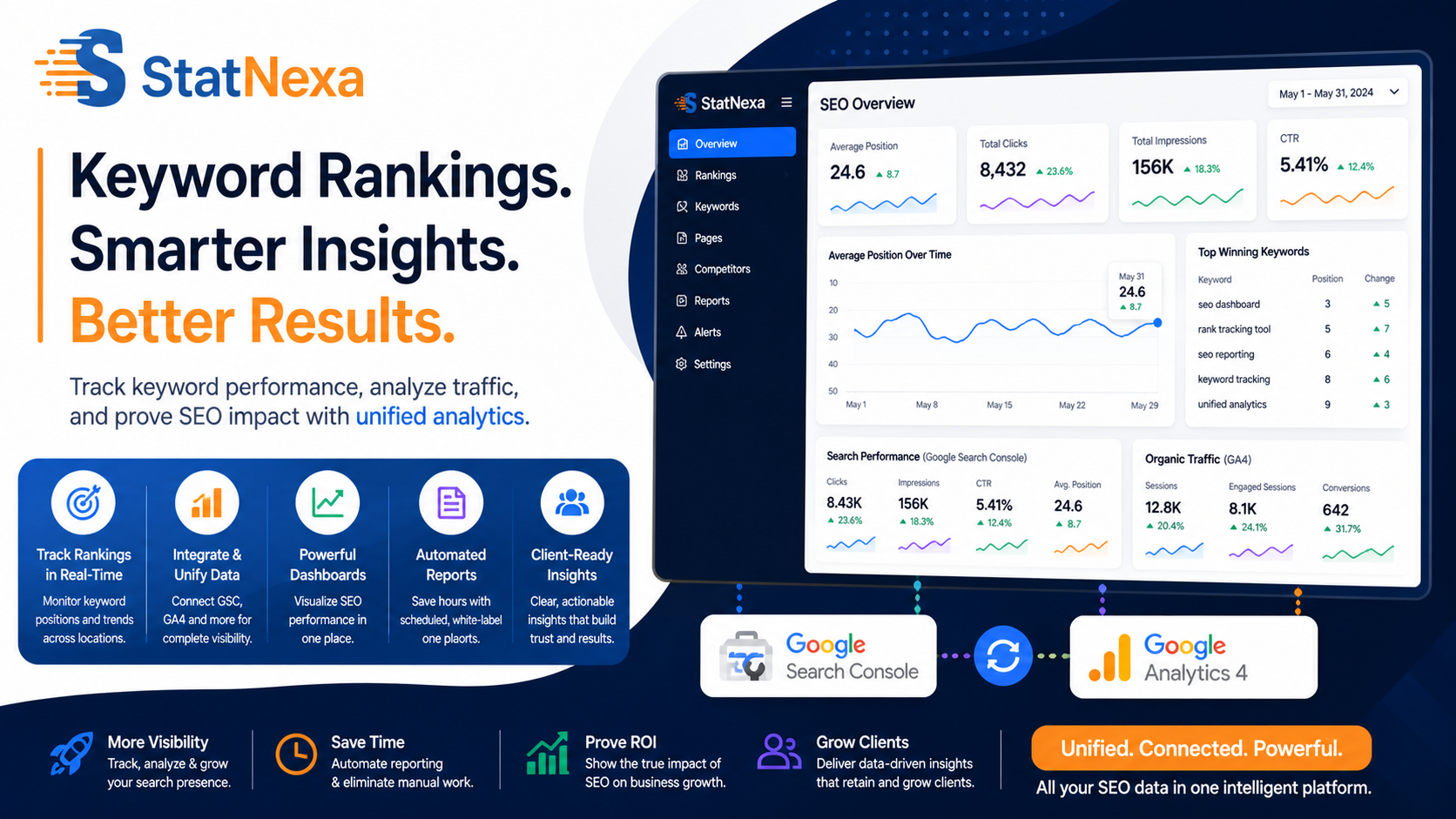
For modern digital agencies, keyword rankings are no longer just SEO metrics, they are business indicators.
Clients want to know:
- Which keywords are ranking?
- Which pages are improving?
- Which campaigns drive organic traffic?
- How does SEO impact conversions and revenue?
This is why keyword rank tracking tools have become essential for agencies managing SEO, content marketing, and multi-channel campaigns.
But here’s the problem:
Most agencies still use disconnected tools for:
- keyword tracking
- analytics
- reporting
- dashboards
- client communication
The result is fragmented reporting, inconsistent data, and wasted time.
That’s why agencies are increasingly moving toward unified marketing analytics platforms like StatNexa that combine:
- rank tracking insights
- Google Search Console
- GA4 analytics
- dashboards
- reports
- scorecards
- SEO visibility metrics
into one centralized platform.
What is Keyword Rank Tracking?
Keyword rank tracking is the process of monitoring where a website appears in search engine results pages (SERPs) for specific keywords.
It helps agencies track:
- keyword positions
- ranking trends
- search visibility
- SEO growth
- organic traffic opportunities
Modern rank tracking goes beyond just “position tracking.”
Agencies now need:
- multi-channel analytics
- traffic correlation
- conversion insights
- landing page performance
- keyword attribution
This is where unified analytics platforms become critical.
Why Agencies Need Keyword Rank Tracking Tools
SEO is highly competitive.
Without proper rank tracking, agencies struggle to:
- measure SEO progress
- demonstrate ROI
- identify ranking opportunities
- prioritize optimization efforts
Keyword tracking tools help agencies:
- monitor keyword movement
- detect ranking drops
- discover high-performing content
- analyze landing page visibility
- improve SEO reporting
Google Search Console provides keyword performance metrics including clicks, impressions, CTR, and average position for organic search visibility.
The Problem with Traditional SEO Reporting
Most agencies use separate tools for:
- keyword rankings
- website analytics
- dashboards
- reports
- client presentations
This creates:
- data silos
- manual reporting
- inconsistent KPIs
- delayed decision-making
Agencies often spend hours exporting data from:
- Google Search Console
- GA4
- spreadsheets
- SEO tools
and manually building reports.
Modern agencies need a unified system.
Unified Analytics for SEO Agencies
Unified analytics combines:
- keyword rankings
- traffic analytics
- user behavior
- conversions
- campaign performance
into one platform.
Instead of viewing SEO separately from business metrics, agencies can understand:
- which keywords drive traffic
- which pages convert
- how rankings impact revenue
- what campaigns influence SEO growth
This creates a complete SEO intelligence system.
How StatNexa Helps Agencies Track Keyword Performance
StatNexa helps agencies centralize SEO reporting and rank tracking insights through integrations with platforms like:
- Google Search Console
- Google Analytics 4 (GA4)
StatNexa enables agencies to monitor:
- keyword rankings
- impressions
- clicks
- CTR
- landing page performance
- organic traffic trends
inside unified dashboards and reports.
StatNexa integrates Google Search Console to help users monitor search performance, keyword rankings, backlinks, and SEO metrics in one centralized platform.
StatNexa also enhances GA4 by centralizing marketing and analytics data into streamlined dashboards and reporting systems.
Google Search Console + GA4 = Powerful SEO Insights
One of the biggest advantages for agencies is combining:
- Google Search Console data
- GA4 behavioral analytics
into a single dashboard.
This allows agencies to connect:
- keyword visibility
- landing page traffic
- user engagement
- conversions
instead of analyzing them independently.
Integrating GSC with GA4 enables marketers to understand which search queries drive traffic, engagement, and conversions.
Key Metrics Agencies Should Track
Keyword Visibility Metrics
- Average position
- Impressions
- Clicks
- CTR
- Keyword trends
Landing Page Metrics
- Organic sessions
- Bounce rate
- Engagement time
- Conversions
- Revenue attribution
SEO Performance Metrics
- Search visibility
- Top-ranking pages
- Traffic growth
- Device performance
- Geographic traffic
Unified SEO Dashboards
Modern SEO dashboards combine:
- Google Search Console
- GA4
- keyword tracking
- campaign analytics
into one visual interface.
A unified SEO dashboard helps agencies:
- monitor SEO health
- identify ranking opportunities
- analyze landing page performance
- automate reporting
GA4 SEO dashboards centralize search performance, user engagement, and landing page analytics into one visual reporting system.
Example Use Cases for Agencies
1. Client SEO Reporting
Agencies can create automated dashboards showing:
- keyword growth
- ranking changes
- traffic increases
- SEO conversions
instead of manually building reports every month.
2. Landing Page Optimization
By combining:
- Search Console keyword data
- GA4 engagement metrics
agencies can identify:
- high-ranking pages with poor conversions
- pages with strong CTR but low engagement
- underperforming SEO content
3. Multi-Channel Analytics
SEO should not operate in isolation.
Unified analytics allows agencies to compare SEO performance alongside:
- paid ads
- social media
- email campaigns
- referral traffic
This creates better attribution and ROI visibility.
Best Practices for Keyword Rank Tracking
1. Focus on Business Impact
Keyword rankings alone are not enough.
Track:
- conversions
- leads
- revenue impact
not just rankings.
2. Combine Rankings with Analytics
The best agencies combine:
- Search Console data
- GA4 behavior metrics
- landing page analytics
for deeper insights.
3. Use Unified Dashboards
Avoid fragmented reporting.
Centralized dashboards improve:
- reporting consistency
- decision-making
- client communication
4. Track Trends, Not Daily Fluctuations
SEO rankings naturally fluctuate.
Focus on:
- long-term visibility trends
- keyword growth patterns
- organic traffic increases
5. Automate Reporting
Automated dashboards save agencies hours every month.
Modern reporting systems should automate:
- KPI tracking
- rank updates
- scorecards
- client reports
Why Agencies Are Moving Toward Unified Analytics Platforms
Traditional SEO tools focus primarily on rankings.
But modern agencies need:
- keyword tracking
- analytics
- dashboards
- reports
- attribution
- client visibility
all in one place.
This is why unified analytics platforms are becoming the future of SEO reporting.
The Future of Rank Tracking
Keyword tracking is evolving from:
- isolated position monitoring
➡️ marketing intelligence systems
The future belongs to:
- unified analytics
- AI-powered insights
- automated reporting
- predictive SEO dashboards
- cross-channel attribution
Agencies that centralize SEO analytics will:
- scale faster
- improve reporting
- increase efficiency
- deliver better client outcomes
How StatNexa Fits Into the Future of SEO Analytics
StatNexa is built for agencies and marketing teams that want to unify:
- keyword tracking
- analytics
- reporting
- dashboards
- scorecards
- OKRs
into one centralized marketing intelligence platform.
Through integrations like:
- Google Search Console
- GA4
StatNexa helps agencies transform fragmented SEO data into actionable insights.
Instead of managing disconnected tools and spreadsheets, agencies can monitor all SEO performance through unified dashboards designed for modern marketing operations.
Final Thoughts
Keyword rank tracking tools are no longer optional for agencies.
But rankings alone are not enough.
Modern agencies need:
- unified analytics
- cross-channel visibility
- automated reporting
- SEO dashboards
- business intelligence
to truly understand marketing performance.
The future of SEO belongs to platforms that combine:
- rankings
- traffic
- engagement
- conversions
- reporting
into one intelligent system. And that’s exactly where platforms like StatNexa are helping agencies move beyond traditional SEO reporting and into the era of unified marketing analytics