
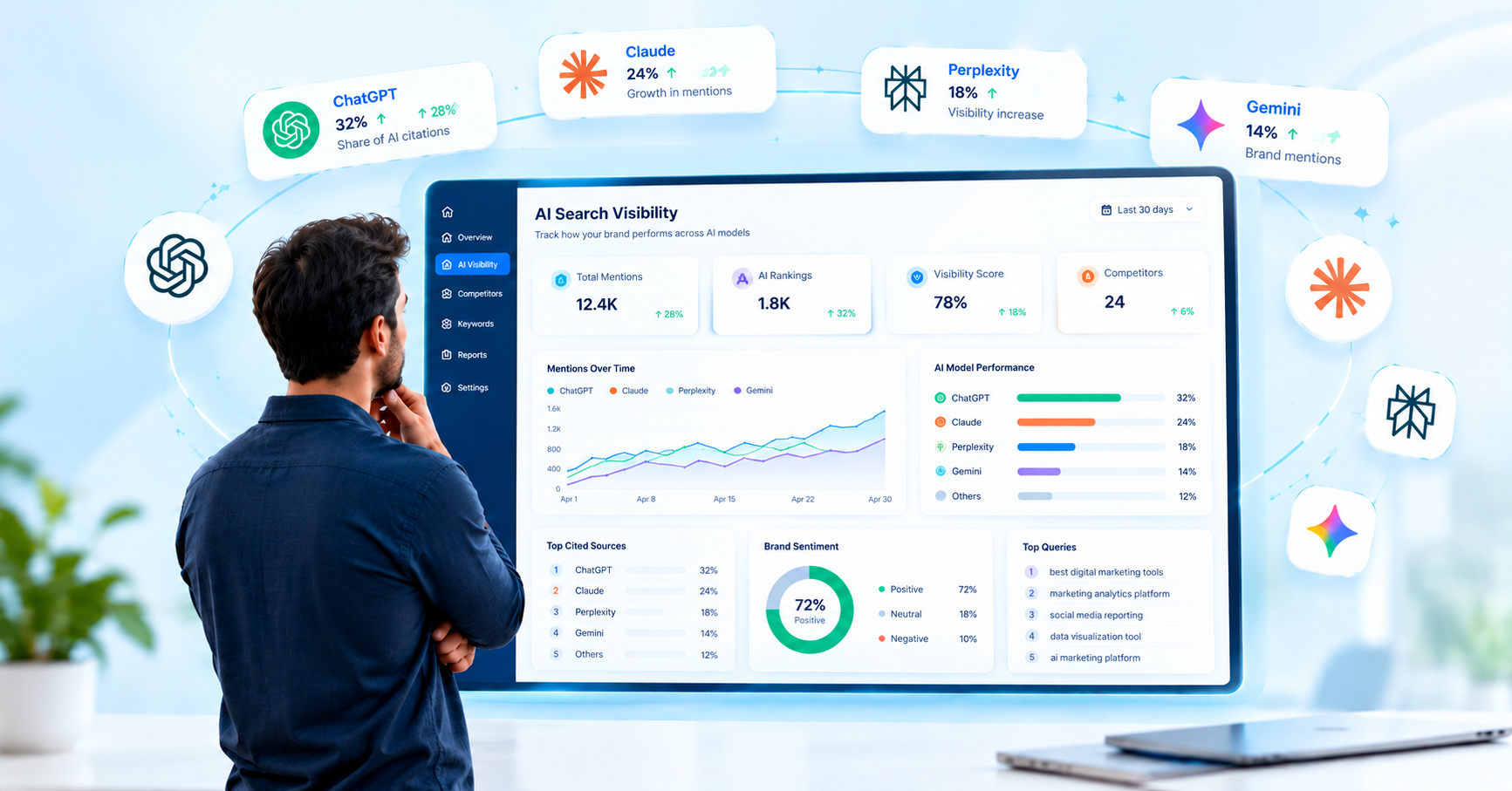
People are no longer relying only on Google to find answers. They are asking ChatGPT, Perplexity, Gemini, Claude, and other AI search tools for recommendations, products, services, and companies.
For marketing agencies, this creates a new question:
How do you know whether your clients are being mentioned, recommended, or cited by AI search engines?
Traditional SEO tools can tell you where a website ranks on Google for a keyword. But that does not tell the full story anymore. A brand might rank well in traditional search and still be almost invisible when someone asks ChatGPT or Perplexity for a recommendation.
That is where LLM rank tracking tools come in.
These platforms help agencies monitor how brands appear across AI-generated search results, track visibility, discover competitors, and understand how their online presence is changing.
In this guide, we look at the 10 best LLM rank tracking tools for marketing agencies in 2026, what each tool does best, its strengths and weaknesses, and which type of agency should consider it.
Table of Contents
- What Is LLM Rank Tracking?
- Why Marketing Agencies Need LLM Rank Tracking
- How We Selected These Tools
- 10 Best LLM Rank Tracking Tools
- Comparison of the Best LLM Rank Tracking Tools
- How to Choose the Right LLM Rank Tracker
- Common Mistakes Agencies Should Avoid
- Final Thoughts
What Is LLM Rank Tracking?
LLM rank tracking is the process of monitoring how often and where a brand, business, product, or website appears in answers generated by large language models and AI search platforms.
Traditional rank tracking asks:
“Where does my website rank on Google?”
LLM tracking asks a different question:
“When someone asks an AI platform about my industry, product, or service, does my brand appear in the answer?”
For example, a digital marketing agency may rank on page one of Google for “best SEO agency in New York.”
But when a potential customer asks ChatGPT:
“What are the best SEO agencies in New York?”
the agency may not be mentioned at all.
That gap is becoming important for marketers.
A good LLM rank tracker can monitor prompts, brand mentions, competitors, citations, visibility, and other signals across AI search platforms.
Why Marketing Agencies Need LLM Rank Tracking
Marketing agencies manage visibility for multiple brands at the same time. That makes AI search monitoring more complicated than checking one website every few days.
Here are some reasons agencies are starting to use AI rank tracking tools.
1. Search behavior is changing
Customers are using AI tools to research businesses, products, software, and services.
Instead of searching for ten websites and comparing them manually, they may ask an AI platform to provide a shortlist.
If a client is missing from those recommendations, there is a visibility problem.
2. Google rankings are no longer the whole picture
Google rankings still matter. However, agencies now need to consider traditional search and AI-generated results together.
A client can have strong organic rankings but weak AI search visibility.
Tracking both gives agencies a better understanding of overall search performance.
3. Agencies need competitive data
Clients will eventually ask:
“Why is my competitor being recommended by ChatGPT while we aren’t?”
Without tracking data, answering that question can be difficult.
LLM tracking platforms can help agencies identify which competitors appear more frequently and which topics or prompts trigger those mentions.
4. Reporting is becoming more complex
Agency clients want simple reports.
They don’t want screenshots from five different AI platforms every month.
The best LLM SEO tools help agencies collect visibility data and turn it into reports that are easier to understand and share.
How We Selected These LLM Rank Tracking Tools
We looked at these platforms based on factors that matter to marketing agencies, including:
- AI search visibility tracking
- LLM and AI platform coverage
- Prompt or query tracking
- Brand mention monitoring
- Competitor tracking
- Citation or source analysis
- Reporting capabilities
- Agency use cases
- Ease of use
- Pricing and scalability
No single platform will be perfect for every agency.
The right choice depends on the number of clients you manage, the AI platforms you want to monitor, reporting requirements, and your budget.
10 Best LLM Rank Tracking Tools for Marketing Agencies in 2026
1. StatNexa
StatNexa takes a broader approach to marketing reporting by bringing data from multiple marketing channels into a unified reporting environment.
For agencies, this is important because LLM rank tracking is only one part of the client reporting process.
An agency may need to combine SEO performance, Google Search Console data, Google Analytics, paid advertising, social media, and AI visibility into one client-friendly report.
StatNexa can help agencies reduce the need to manually collect numbers from different platforms.
Its reporting and dashboard features are particularly useful for agencies that want clients to see marketing performance in one place rather than receiving disconnected reports.
Key strengths
- Unified marketing dashboard
- Automated reporting
- AI insights
- Scorecards
- OKR tracking
- White-label dashboards
- Custom metrics
- Multiple marketing integrations
Best for
Marketing agencies that want to combine SEO, marketing performance, and AI visibility reporting in one workflow.
Pros
- Built around agency reporting
- Unified dashboard approach
- White-label reporting
- Automated reports
- Useful for combining different marketing channels
Cons
- Agencies looking for highly specialized LLM research may still want a dedicated AI visibility platform
- AI rank tracking should be evaluated based on the exact engines and metrics an agency needs
2. Ahrefs
Ahrefs has long been popular with SEO professionals for backlinks, keyword research, content research, and competitor analysis.
As search moves toward AI-generated answers, Ahrefs has also been developing ways for marketers to understand visibility beyond traditional blue-link rankings.
For agencies, the biggest advantage is the connection between content, backlinks, organic search, and emerging AI visibility.
Instead of treating AI search as completely separate from SEO, agencies can use traditional SEO data to investigate why certain websites may be more visible.
Key strengths
- Strong backlink database
- Content research
- Keyword research
- Competitor analysis
- SEO-focused workflow
Best for
SEO agencies that already use Ahrefs and want to expand their visibility strategy toward AI search.
Pros
- Excellent SEO research
- Strong backlink analysis
- Useful for content strategy
Cons
- Primarily known as an SEO platform
- AI tracking requirements may need additional tools depending on the agency’s workflow
3. Semrush
Semrush is one of the best-known SEO platforms, and it has expanded its capabilities into AI search visibility.
For agencies already using Semrush for keyword research, competitor analysis, backlinks, and traditional SEO, its AI-focused features can make it easier to bring traditional search and AI visibility into the same workflow.
Agencies can use it to understand how brands appear in AI-generated search experiences and compare visibility against competitors.
Key strengths
- Large SEO data ecosystem
- Competitor research
- Keyword and domain analysis
- AI search visibility features
- Useful for agencies managing multiple SEO activities
Best for
SEO agencies that want traditional SEO and AI visibility data in one platform.
Pros
- Established SEO platform
- Wide range of marketing tools
- Strong competitor research capabilities
Cons
- Can be more expensive for smaller agencies
- Large feature set may feel overwhelming for beginners
4. Otterly.AI
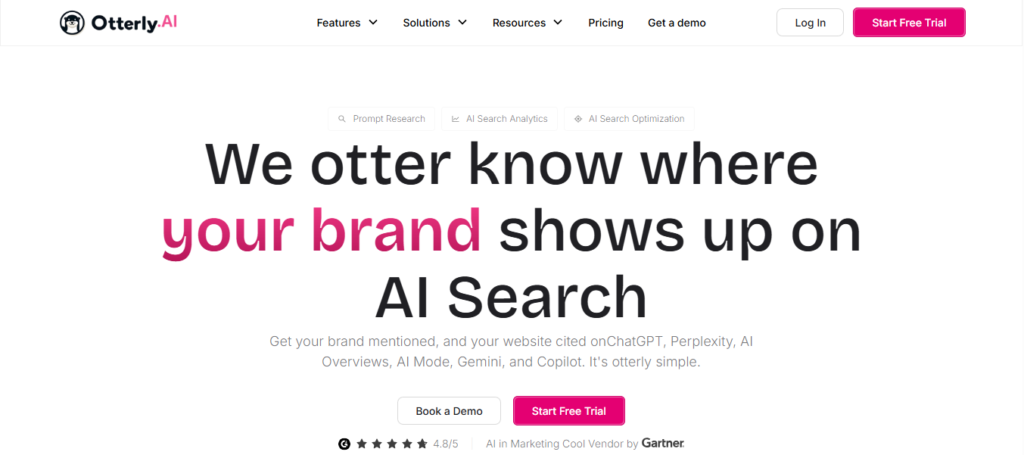
Otterly.AI focuses on monitoring brand visibility across AI search engines.
It is designed for marketers who want to understand whether their brand appears when people ask relevant questions in AI-powered search.
For agencies, this can be useful when creating a dedicated AI visibility tracking workflow for clients.
Rather than checking AI platforms manually, marketers can track predefined searches and monitor changes over time.
Key strengths
- AI search monitoring
- Brand mentions
- Competitor tracking
- Prompt monitoring
- Visibility analysis
Best for
Agencies looking for a dedicated AI visibility monitoring platform.
Pros
- AI-focused
- Easier to understand than some larger enterprise platforms
- Useful for ongoing monitoring
Cons
- Focused primarily on AI visibility rather than broader SEO
- Agencies may still need separate SEO tools
5. Peec AI
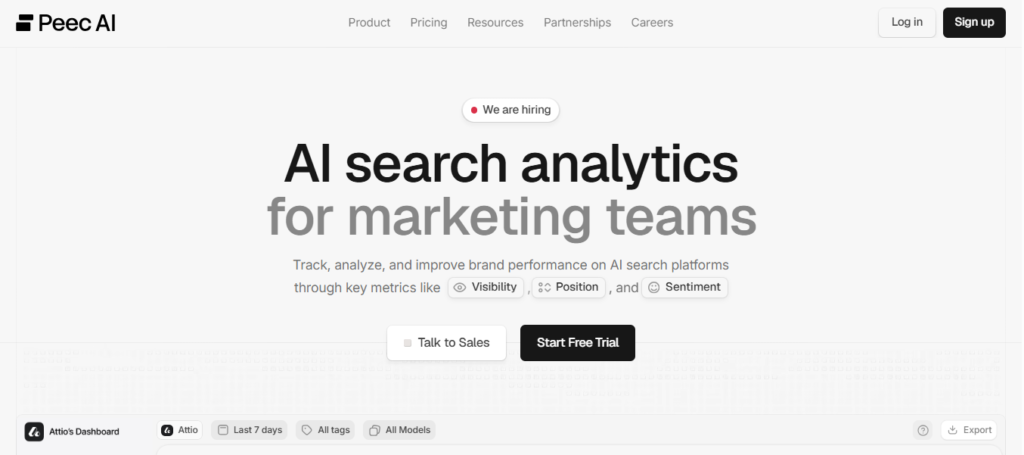
Peec AI is another platform focused on AI search visibility and generative engine optimization.
The platform helps marketers monitor how brands appear in AI-generated answers and understand changes in visibility.
For agencies, the value comes from turning AI search results into measurable data.
Instead of simply saying, “Your brand appeared in ChatGPT,” an agency can start asking deeper questions:
- How often does it appear?
- Which competitors appear?
- Which prompts trigger mentions?
- Which sources are being referenced?
- Is visibility improving?
Key strengths
- AI search tracking
- Brand monitoring
- Competitor analysis
- Visibility reporting
- GEO-focused workflows
Best for
Marketing teams and agencies focusing heavily on generative engine optimization.
Pros
- Focused on AI search
- Useful for tracking visibility trends
- Designed around modern search behavior
Cons
- Not a complete replacement for traditional SEO software
- Best value comes when AI visibility is a serious marketing priority
6. Scrunch AI
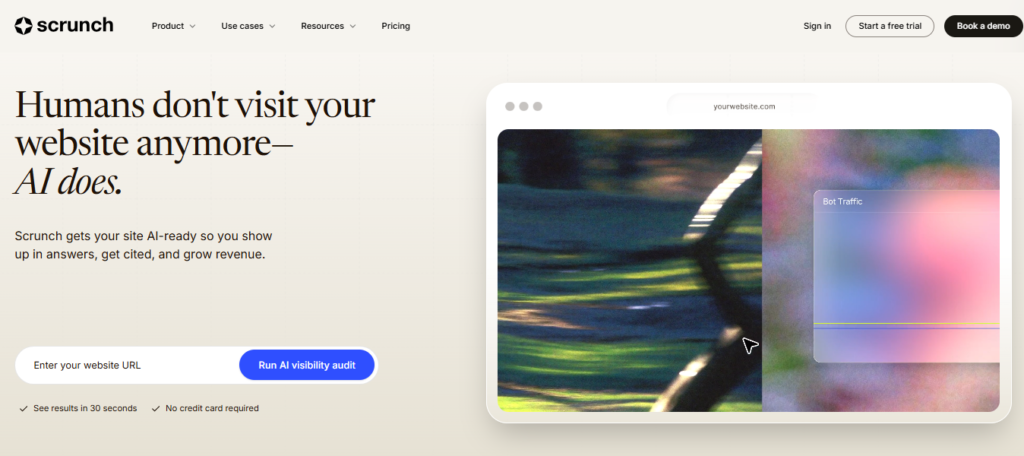
Scrunch AI focuses on helping businesses understand and improve their visibility in AI search.
The platform is designed around the growing need to monitor how companies are represented across AI engines.
For agencies, this can be useful for client audits and ongoing optimization.
One of the biggest benefits of AI visibility platforms is that they can reveal gaps that traditional SEO reports may miss.
A client might have plenty of organic traffic but weak representation in AI answers. That insight can lead to a different content and authority strategy.
Key strengths
- AI search monitoring
- Brand visibility analysis
- AI-focused optimization
- Competitive insights
Best for
Agencies working on GEO and AI search visibility strategies.
Pros
- AI-first approach
- Useful for understanding brand representation
- Relevant to modern search strategies
Cons
- Less focused on traditional SEO
- Agencies may need additional reporting and SEO platforms
7. Writesonic
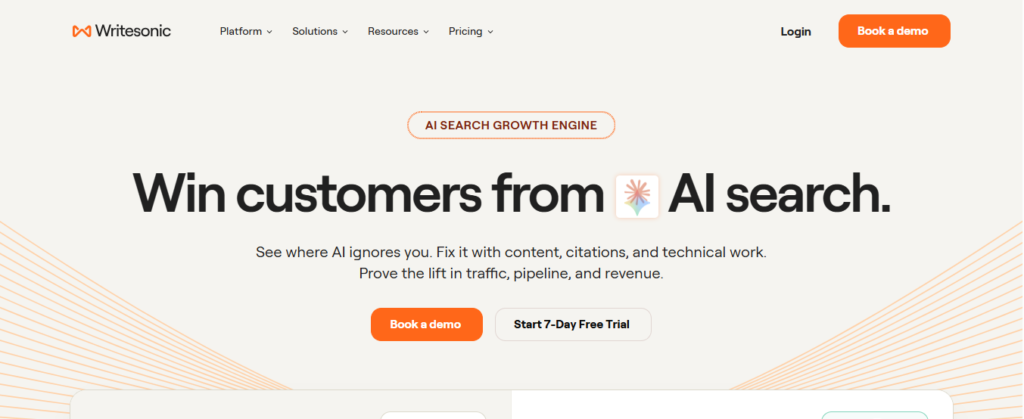
Writesonic is widely known for AI content and marketing tools, but its platform has also expanded into AI search visibility and optimization.
This can be useful for agencies because content creation and AI visibility are closely connected.
An agency can identify a visibility gap, create or optimize content, and then monitor how the brand performs in AI search.
That creates a more complete workflow than simply tracking mentions.
Key strengths
- AI content
- SEO features
- AI search visibility
- Content optimization
- Marketing workflows
Best for
Content and SEO agencies that want AI content and AI visibility capabilities together.
Pros
- Strong content ecosystem
- Useful for content teams
- Combines several AI marketing functions
Cons
- Broader platform can mean a learning curve
- Agencies focused only on rank tracking may prefer a specialized tool
8. SE Ranking
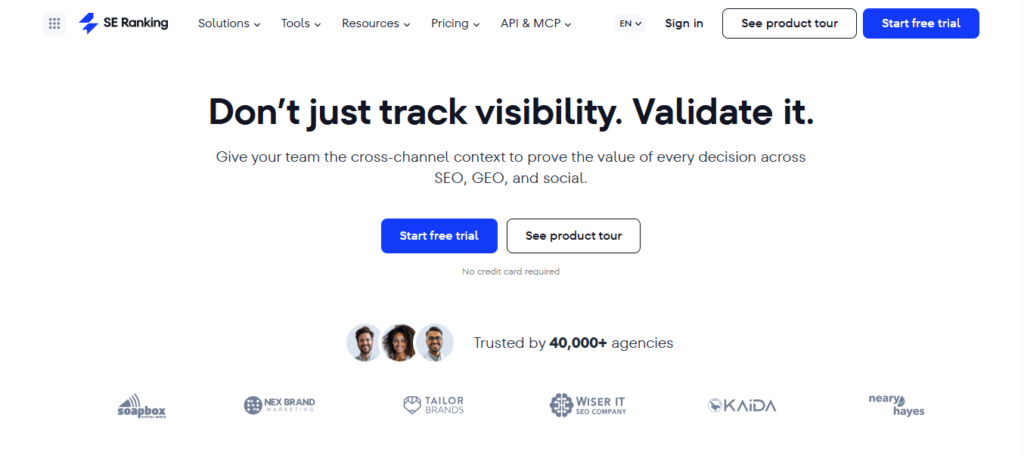
SE Ranking is a popular SEO platform for agencies because of its combination of rank tracking, competitor research, website auditing, and reporting.
Its agency-focused approach makes it useful for teams managing several clients.
As AI search becomes more important, platforms like SE Ranking can be part of a broader strategy that combines traditional rankings with emerging AI visibility data.
The main advantage is the familiar SEO workflow. Agencies can continue monitoring Google performance while adding AI search monitoring where needed.
Key strengths
- Rank tracking
- SEO audits
- Competitor research
- Agency reporting
- Client management
Best for
Small and mid-sized agencies that want a broad SEO platform.
Pros
- Agency-friendly
- Strong traditional SEO capabilities
- Useful reporting options
Cons
- AI-specific capabilities may not be as deep as dedicated AI-first platforms
- Feature availability can vary by plan
9. Nightwatch
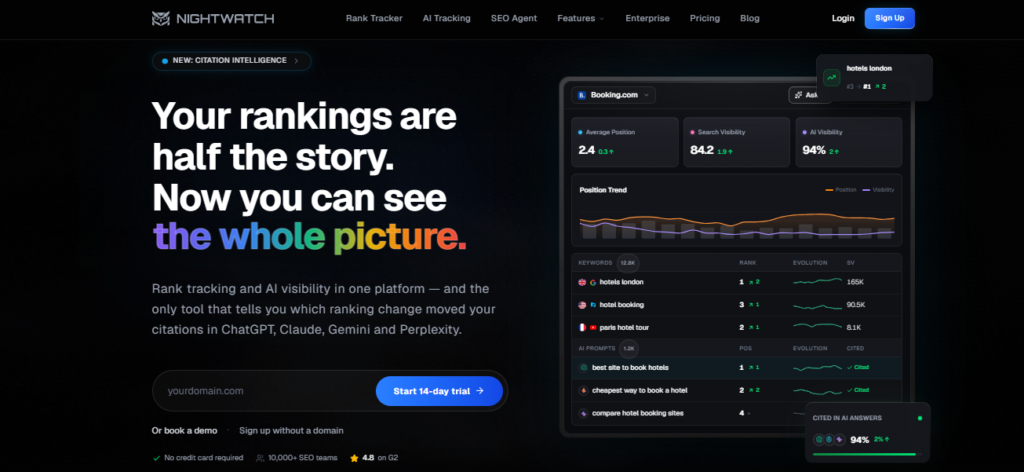
Nightwatch is known for rank tracking and SEO monitoring.
For agencies, rank tracking remains important even as AI search grows because traditional Google rankings still influence visibility, traffic, and brand authority.
Nightwatch can therefore be useful as part of a wider search visibility workflow.
Agencies that want to monitor traditional rankings alongside emerging AI search metrics can use a combination of tools rather than expecting one platform to handle everything.
Key strengths
- Rank tracking
- SEO monitoring
- Competitor tracking
- Reporting
- Local SEO capabilities
Best for
Agencies that still have a strong traditional rank-tracking requirement.
Pros
- Strong rank tracking
- Useful for ongoing monitoring
- Agency-friendly reporting
Cons
- More traditional SEO-focused
- AI search may require complementary tools
10. Profound
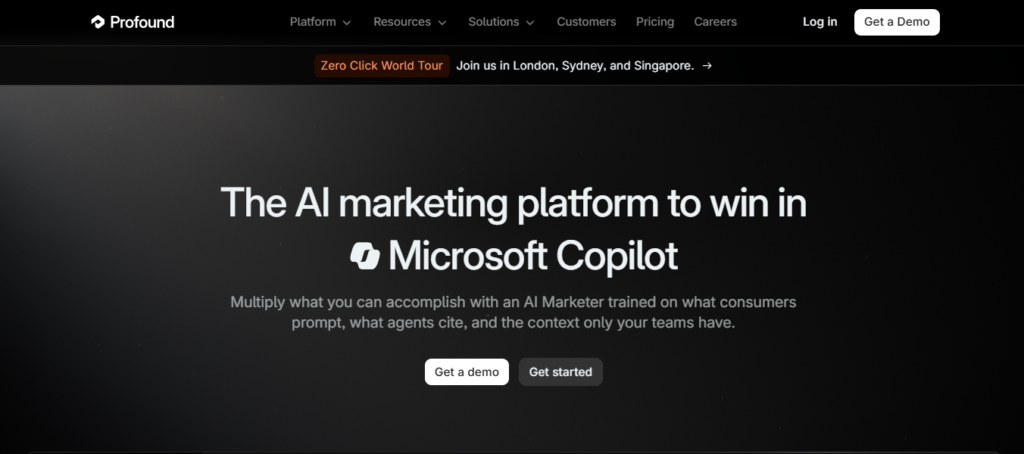
Profound is built specifically around AI search visibility and generative engine optimization.
Instead of focusing only on traditional search rankings, it helps brands understand how they appear across AI search experiences.
This makes it particularly interesting for agencies working with enterprise brands that need deeper visibility into AI-generated answers.
Agencies can use the platform to track prompts, monitor competitors, understand sources, and analyze how brands are represented in AI responses.
Key strengths
- AI search visibility
- Prompt tracking
- Competitor monitoring
- Generative engine optimization
- Brand visibility analysis
Best for
Agencies and larger brands that need dedicated AI search intelligence.
Pros
- Strong AI-first approach
- Built around emerging search behavior
- Useful for competitive analysis
Cons
- May be more than smaller agencies need
- Pricing can be a consideration for smaller teams
Comparison of the Best LLM Rank Tracking Tools
| Tool | Best For | AI Visibility | Competitor Tracking | Reporting | Traditional SEO |
|---|---|---|---|---|---|
| Semrush | Full SEO + AI | ✓ | ✓ | ✓ | ✓ |
| Ahrefs | SEO + content | ✓ | ✓ | ✓ | ✓ |
| Profound | Enterprise AI visibility | ✓ | ✓ | ✓ | — |
| Otterly.AI | AI monitoring | ✓ | ✓ | ✓ | — |
| Peec AI | GEO | ✓ | ✓ | ✓ | — |
| Scrunch AI | AI visibility | ✓ | ✓ | ✓ | — |
| Writesonic | AI content + visibility | ✓ | ✓ | ✓ | ✓ |
| SE Ranking | Agency SEO | ✓ | ✓ | ✓ | ✓ |
| Nightwatch | Rank tracking | ✓ | ✓ | ✓ | ✓ |
| StatNexa | Agency reporting | ✓ | ✓ | ✓ | ✓ |
Note: Features, AI engine coverage, and pricing can change frequently. Agencies should verify the current plan and supported platforms before purchasing.
How to Choose the Right LLM Rank Tracker
Choosing an LLM rank tracking tool is not just about finding the platform with the longest feature list.
Think about what your agency actually needs.
1. Which AI platforms does it track?
Check whether the tool supports the AI search platforms your clients care about.
For example:
- ChatGPT
- Google AI search experiences
- Gemini
- Perplexity
- Claude
- Other emerging AI search platforms
More coverage can be useful, but only if your clients actually use those platforms.
2. Can you track competitors?
Competitor tracking is one of the most valuable parts of AI visibility monitoring.
You want to know not only whether your client appears, but also:
Who appears instead?
That information can help you identify content gaps, authority gaps, and opportunities for optimization.
3. Can you report results to clients?
This is especially important for agencies.
Raw AI responses are difficult to turn into a monthly client report.
Look for tools that provide dashboards, reports, trends, exports, or white-label options.
4. Can you connect AI visibility with SEO data?
AI visibility should not exist in a separate marketing universe.
Your agency should be able to understand how content, backlinks, organic rankings, brand mentions, and other signals relate to AI visibility.
The more connected the data is, the easier it becomes to create a useful strategy.
5. Does the pricing work for your agency?
Consider:
- Number of clients
- Number of tracked prompts
- Number of users
- Reporting requirements
- Competitor tracking
- White-label requirements
- AI platforms supported
A cheap tool can become expensive when you need to monitor dozens of clients.
Common Mistakes Agencies Should Avoid
Tracking only Google rankings
Google rankings are still important, but they don’t tell you everything about modern search visibility.
Start monitoring both traditional search and AI-generated results.
Tracking too few prompts
One or two prompts are not enough to understand a brand’s AI visibility.
Create groups of relevant commercial, informational, local, and comparison-based prompts.
Looking only at brand mentions
A brand mention is useful, but context matters.
Ask:
- Was the brand recommended?
- Was it mentioned positively?
- Was a competitor ranked higher?
- Which websites were cited?
- What information influenced the answer?
Treating AI visibility like traditional rankings
AI results don’t always behave like Google’s ten blue links.
The same prompt can sometimes produce different answers.
That means agencies should focus on visibility trends and patterns, rather than obsessing over one exact position.
Forgetting the reporting side
Getting AI visibility data is only half the job.
You also need to explain what the numbers mean to the client.
A good report should answer:
What changed? Why did it change? What should we do next?
Final Thoughts
The rise of AI search is changing how brands compete for visibility.
Traditional SEO is not disappearing, but agencies now have another layer to monitor.
LLM rank tracking tools help marketers understand whether their clients are being discovered, mentioned, recommended, and cited in AI-generated answers.
The best tool depends on your agency’s needs.
If you need a complete SEO ecosystem, platforms such as Semrush, Ahrefs, and SE Ranking may make sense. If your main priority is dedicated AI visibility, platforms such as Profound, Otterly.AI, Peec AI, or Scrunch AI are worth exploring.
For agencies that want to bring marketing performance and reporting together, StatNexa can be a useful part of the workflow.
The important thing is to start measuring AI visibility now.
Because your clients aren’t only asking:
“Where do we rank on Google?”
They are increasingly asking:
“Are AI platforms recommending us?”
And that is a question every modern marketing agency should be ready to answer.