
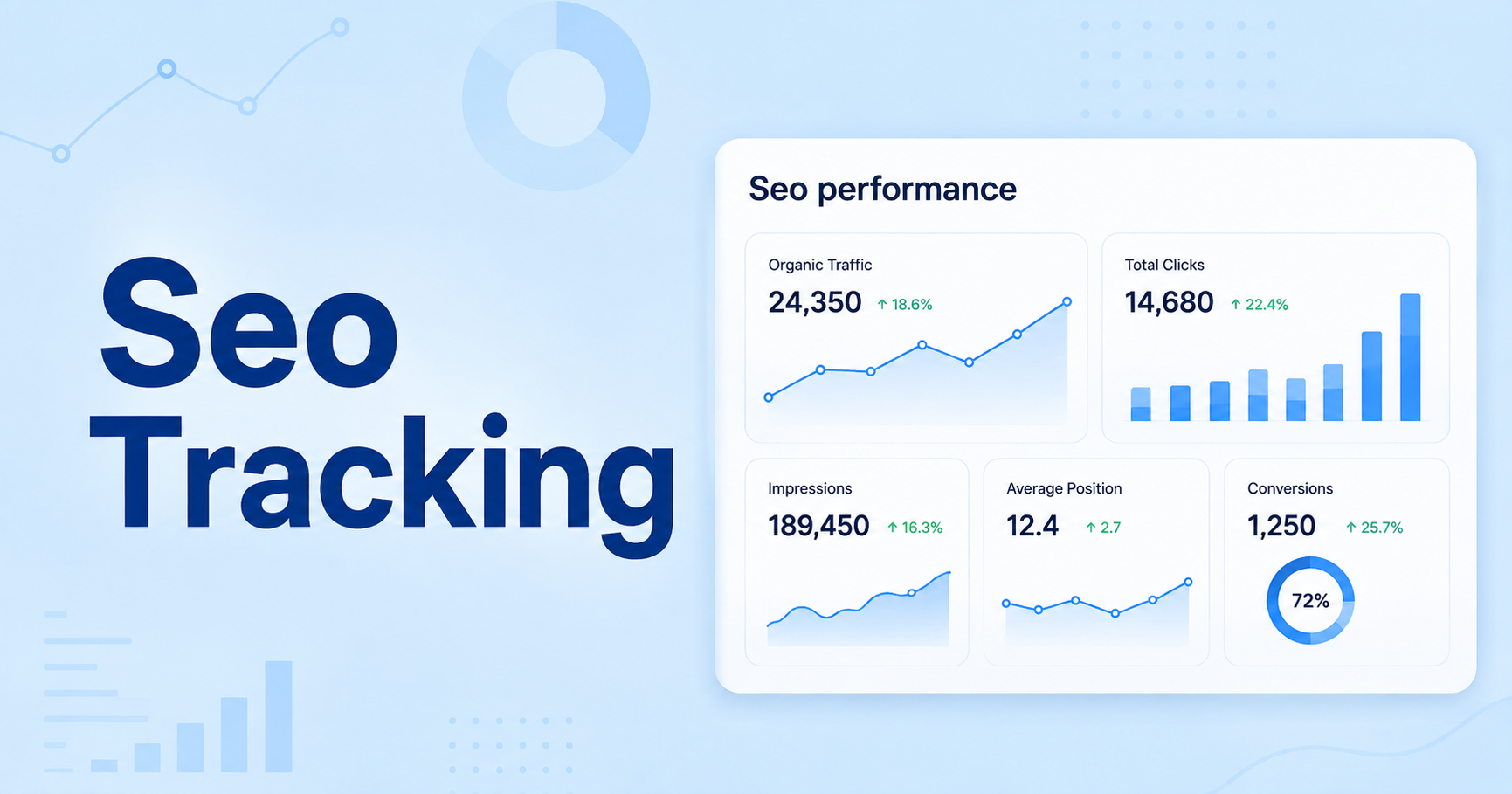
You published a new page. You optimized the title, added keywords, improved the content, and waited for Google to notice.
But then comes the big question: Is your SEO actually working?
Traffic might increase while conversions stay flat. Rankings may improve for 20 keywords but drop for your most valuable ones. Your organic clicks could rise, but the visitors may not be the right audience.
This is why SEO tracking matters.
SEO tracking helps you see what is happening after you publish and optimize your website. Instead of guessing whether your SEO strategy is working, you can track rankings, organic traffic, conversions, backlinks, engagement, and other important signals.
In this guide, you’ll learn how SEO tracking works, what metrics to monitor, which tools to use, and how agencies can build a simple SEO tracking process that turns data into better decisions.
Table of Contents
- What Is SEO Tracking?
- Why Is SEO Tracking Important?
- What SEO Metrics Should You Track?
- How to Track SEO Rankings
- How to Track Organic Traffic
- How to Track SEO Conversions
- How to Track Overall SEO Performance
- Best SEO Tracking Tools
- SEO Tracking for Agencies
- Common SEO Tracking Mistakes
- How Often Should You Track SEO?
- SEO Tracking Best Practices
- Conclusion
- FAQs About SEO Tracking
What Is SEO Tracking?
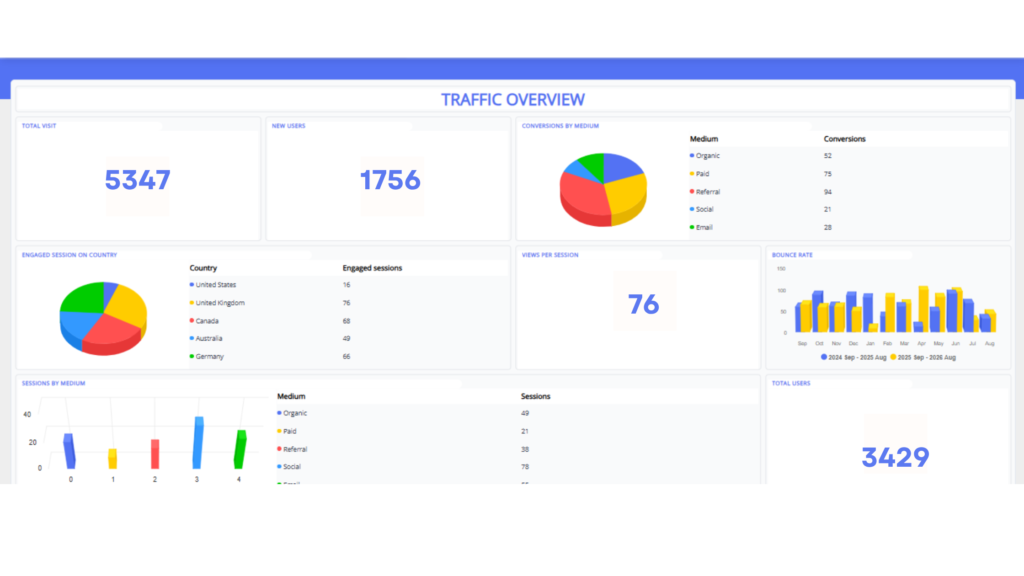
SEO tracking is the process of monitoring your website’s performance in search engines over time.
It involves collecting and analyzing data such as:
- Keyword rankings
- Organic clicks
- Organic traffic
- Search impressions
- Click-through rate (CTR)
- Conversions
- Backlinks
- Indexed pages
- Engagement
- Revenue from organic search
The goal isn’t simply to see whether a keyword moved from position 15 to position 10.
The bigger goal is to understand whether your SEO efforts are bringing valuable visitors and business results.
For example, imagine an agency is optimizing a client’s website.
Before optimization:
- 20,000 monthly impressions
- 800 organic clicks
- 30 leads
Three months later:
- 35,000 impressions
- 1,600 organic clicks
- 65 leads
That’s a much better SEO result than simply saying, “We improved rankings.”
Good SEO tracking connects search visibility → traffic → user actions → business outcomes.
Why Is SEO Tracking Important?
SEO takes time. You may spend weeks creating content, fixing technical issues, improving internal links, and building authority.
Without tracking, you don’t know which activities are producing results.
1. It Shows Whether Your SEO Strategy Is Working
Tracking gives you evidence instead of assumptions.
If rankings, clicks, qualified traffic, and conversions are moving in the right direction, you have a stronger reason to continue your strategy.
If they aren’t, you can investigate what needs to change.
2. It Helps Find Ranking Opportunities
Suppose a page ranks at position 11 for an important keyword.
That page is already close to page one.
Instead of creating another article, you might improve the existing page by:
- Adding missing information
- Improving the title
- Answering related questions
- Strengthening internal links
- Updating outdated sections
- Improving the overall user experience
SEO tracking helps you find these opportunities.
3. It Makes Reporting Easier
For businesses and agencies, SEO data often needs to be shared with clients or managers.
A clear report can show:
What happened → Why it happened → What you’re doing next.
That’s far more useful than sending a spreadsheet filled with hundreds of numbers.
What SEO Metrics Should You Track?
You don’t need to track every SEO metric available.
Focus on metrics that help you answer important questions.
| SEO Metric | What It Tells You |
|---|---|
| Keyword rankings | Where your pages appear in search |
| Organic clicks | How many users visit from search |
| Impressions | How often your pages appear |
| CTR | How often people click after seeing your result |
| Organic traffic | How much traffic search generates |
| Conversions | Whether traffic creates business value |
| Conversion rate | How efficiently traffic converts |
| Backlinks | How other websites link to your content |
| Indexed pages | Which pages search engines have indexed |
| Engagement | What visitors do after arriving |
Let’s look at the most important areas in more detail.
How to Track SEO Rankings
SEO rank tracking means monitoring where your website or specific pages appear for target search queries.
For example, you might track:
- SEO reporting tools
- marketing dashboard
- KPI dashboard
- SEO tracking
- SEO reporting software
You can then monitor whether those keywords move up, down, or stay stable.
Track More Than Position
Ranking position is useful, but don’t treat it as the only measurement.
A keyword moving from position 20 to position 10 sounds impressive.
But what if nobody searches for that keyword?
The ranking improved, but the business impact may be tiny.
Instead, consider:
- Search volume
- Ranking position
- Impressions
- Clicks
- CTR
- Search intent
- Traffic quality
- Conversions
This gives you a much clearer picture.
Track Keyword Groups
Instead of putting every keyword into one list, group them by topic or intent.
For example:
SEO Tracking
- SEO tracking
- SEO tracking tools
- SEO performance tracking
- SEO monitoring
Rank Tracking
- SEO rank tracking
- rank tracking SEO
- Google rank tracker
- keyword rank tracking
Agency SEO
- tracking for SEO agencies
- SEO reporting for agencies
- SEO agency reporting tools
This makes it easier to understand which topic areas are growing.
How to Track Organic Traffic
Rankings tell you where you appear.
Traffic tells you whether people are actually visiting.
Google Analytics can help you monitor organic traffic and understand what visitors do after arriving on your website.
Look at:
- Organic sessions
- Organic users
- Landing pages
- Traffic sources
- New vs returning visitors
- Engagement
- Conversions
Google Search Console is also useful for search performance data such as clicks, impressions, CTR, and average position.
Look at Landing Pages
Don’t only track total organic traffic.
Find out which pages are generating it.
For example:
| Landing Page | Organic Traffic | Leads |
| SEO Guide | 1,800 | 12 |
| KPI Dashboard Guide | 1,200 | 20 |
| Marketing Reporting Guide | 900 | 28 |
The SEO Guide gets more traffic, but the Marketing Reporting Guide generates more leads.
That tells you something important:
More traffic doesn’t always mean better performance.
How to Track SEO Conversions
Traffic is not the final goal for most businesses.
The real goal might be:
- Form submissions
- Demo requests
- Free trials
- Sign-ups
- Purchases
- Phone calls
- Newsletter subscriptions
- Contact requests
This is where SEO tracking becomes much more valuable.
Track Assisted Conversions Too
Someone might discover your website through Google today but convert several days later after returning through another channel.
If you only look at the final traffic source, you may underestimate SEO’s contribution.
Where possible, use attribution reports to understand how organic search contributes to the customer journey.
Calculate Organic Conversion Rate
A simple formula is:
Organic Conversion Rate = Organic Conversions ÷ Organic Visitors × 100
For example:
1,000 organic visitors generate 40 leads.
40 ÷ 1,000 × 100 = 4% conversion rate
Now you can compare SEO traffic quality over time.
How to Track Overall SEO Performance
A strong SEO performance tracking system combines several data points.
Think of it as a funnel:
Visibility → Clicks → Traffic → Engagement → Conversions → Revenue
Each stage answers a different question.
Visibility
Are people seeing your pages?
Track:
- Impressions
- Keyword rankings
- Search visibility
Traffic
Are people clicking?
Track:
- Organic clicks
- Organic sessions
- Landing page traffic
Engagement
Are visitors finding what they need?
Track:
- Engagement
- Page interactions
- Relevant landing-page behavior
Conversions
Are visitors taking valuable actions?
Track:
- Leads
- Sign-ups
- Purchases
- Demo requests
Revenue
Is SEO contributing to business growth?
For ecommerce and lead-generation businesses, revenue and pipeline data can provide the strongest connection between SEO and business performance.
Best SEO Tracking Tools
You don’t need dozens of tools.
A practical SEO tracking setup can start with a few core platforms.
Google Search Console
Google Search Console is useful for understanding how your website performs in Google Search.
You can monitor:
- Clicks
- Impressions
- CTR
- Average position
- Search queries
- Pages receiving search traffic
It’s particularly useful for identifying queries and pages that are already gaining visibility.
Google Analytics
Google Analytics helps you understand what happens after visitors reach your website.
Use it to analyze:
- Organic traffic
- Landing pages
- Engagement
- Conversions
- User journeys
SEO Rank Tracking Tools
Dedicated rank tracking platforms can help monitor keyword positions across locations, devices, search engines, and time periods.
They are useful when you need regular ranking reports or want to monitor large keyword sets.
SEO Reporting Dashboards
For teams and agencies managing multiple websites, dashboards can bring data from different sources into one place.
For example, StatNexa can be used to bring marketing and SEO data together into a dashboard, making it easier to monitor performance and prepare client-facing reports.
The important thing isn’t the number of tools you use.
It’s whether your tools help you spot changes and take action.
SEO Tracking for Agencies
SEO agencies have a different challenge.
You aren’t tracking one website.
You may be managing SEO performance for 10, 20, or even 50 clients.
Doing everything manually can quickly become a reporting headache.
Build a Standard Tracking Framework
Create a consistent framework for every client.
For example:
Monthly SEO Dashboard
- Organic traffic
- Keyword visibility
- Top-performing pages
- Ranking changes
- Organic conversions
- Technical SEO issues
- Backlink changes
- Key wins
- Problems
- Next month’s actions
This makes reporting faster and easier to compare.
Focus on Business Results
Clients don’t necessarily care that 47 keywords moved up.
They want to know:
“What did SEO do for my business?”
So your report should connect SEO metrics to outcomes.
Instead of:
“Organic traffic increased by 18%.”
Try:
“Organic traffic increased 18%, bringing 420 additional visitors and 14 additional leads.”
The second statement provides context.
Automate Repetitive Reporting
Manual reporting can take hours every month.
You may have to:
- Export data
- Clean spreadsheets
- Copy metrics
- Build charts
- Update slides
- Check numbers
- Send reports
Automation can reduce repetitive work and give marketers more time to analyze performance.
This is where a reporting platform such as StatNexa can be useful for agencies that want to centralize data and build client-ready dashboards.
Common SEO Tracking Mistakes
Even with the right tools, SEO tracking can go wrong.
Mistake 1: Tracking Only Rankings
Rankings matter, but they aren’t the entire story.
Always connect rankings with traffic, conversions, and business outcomes.
Mistake 2: Checking Rankings Every Day
Daily fluctuations are normal.
Google rankings can move because of competition, algorithm changes, search intent, personalization, location, and other factors.
Don’t panic because one keyword dropped two positions overnight.
Look for meaningful trends.
Mistake 3: Focusing Only on Traffic
A traffic increase sounds good.
But if the visitors don’t convert, the business may not benefit.
Always connect traffic with quality and conversions.
Mistake 4: Tracking Too Many Keywords
A huge keyword list can make your reports difficult to understand.
Focus on keywords that matter to your audience, products, services, and business goals.
Mistake 5: Ignoring Search Intent
Ranking for an irrelevant keyword isn’t a major SEO win.
The keyword should attract people who are actually interested in what you offer.
Mistake 6: Reporting Numbers Without Insights
A report full of charts doesn’t automatically provide value.
Your report should answer:
- What changed?
- Why did it change?
- What worked?
- What didn’t work?
- What should we do next?
That’s where SEO analysis becomes more valuable than simple tracking.
How Often Should You Track SEO?
Different SEO metrics need different tracking schedules.
Daily
You can monitor major problems, but don’t overreact to normal ranking changes.
Weekly
Review:
- Ranking trends
- Organic traffic
- Search visibility
- Major page changes
- Technical issues
Monthly
Perform a deeper review of:
- Traffic
- Rankings
- Conversions
- Top pages
- Keyword groups
- Content performance
- Backlinks
- Business outcomes
Quarterly
Step back and review the bigger picture.
Ask:
- Which topics are growing?
- Which pages are underperforming?
- Which keywords are worth targeting next?
- Which content should be updated?
- Is SEO contributing to business growth?
This prevents your SEO strategy from becoming a collection of random tasks.
SEO Tracking Best Practices
Here are some simple rules to keep your tracking useful.
1. Set Goals Before Tracking
Decide what success means.
It could be:
- More qualified traffic
- More leads
- Higher rankings
- More product sign-ups
- More revenue
2. Create a Baseline
Record your current performance before making major SEO changes.
Without a baseline, it’s difficult to measure progress.
3. Track Trends, Not Isolated Numbers
One bad day doesn’t mean your SEO failed.
Look at weekly and monthly trends.
4. Segment Your Data
Break performance down by:
- Page
- Keyword
- Location
- Device
- Topic
- Search intent
- Client
Segments often reveal opportunities that total numbers hide.
5. Connect SEO Data With Business Data
The strongest SEO reporting connects search performance with leads, customers, and revenue.
That’s how you move from SEO reporting to SEO decision-making.
Conclusion
SEO tracking isn’t about collecting as many numbers as possible.
It’s about understanding what those numbers mean.
Rankings tell you how visible you are. Traffic tells you whether people are visiting. Engagement shows what happens after they arrive. Conversions tell you whether the traffic creates value.
The best SEO tracking process connects all of these pieces.
Start with a small set of important metrics, create a baseline, monitor trends, and turn your findings into actions.
For SEO agencies, a centralized dashboard can make this process much easier by bringing reporting data together and reducing repetitive manual work.
Ultimately, the goal isn’t simply to say “our SEO improved.”
It’s to show how it improved, why it improved, and what that improvement means for the business.
FAQs About SEO Tracking
What is SEO tracking?
SEO tracking is the process of monitoring search engine performance, including keyword rankings, organic traffic, clicks, conversions, and other SEO metrics over time.
What is SEO rank tracking?
SEO rank tracking is monitoring where your website or individual pages appear in search results for specific keywords. It helps you identify ranking improvements, declines, and opportunities.
What is the best way to track SEO performance?
Use a combination of Google Search Console, Google Analytics, rank tracking, and conversion data. This gives you a complete view of visibility, traffic, and business results.
How often should I check SEO rankings?
You can monitor rankings regularly, but avoid making decisions based on daily fluctuations. Weekly and monthly trend analysis is usually more useful.
Why is rank tracking SEO important?
Rank tracking SEO helps you understand whether your target keywords are gaining or losing visibility. It can also help identify pages that are close to reaching page one.
What should SEO agencies track?
SEO agencies should track rankings, organic traffic, impressions, clicks, CTR, conversions, top-performing pages, technical issues, backlinks, and business outcomes for each client.
Can SEO tracking improve rankings?
Tracking itself doesn’t improve rankings. However, it helps you identify problems and opportunities so you can make better SEO decisions, such as updating content, improving internal links, fixing technical issues, or targeting better keywords.