
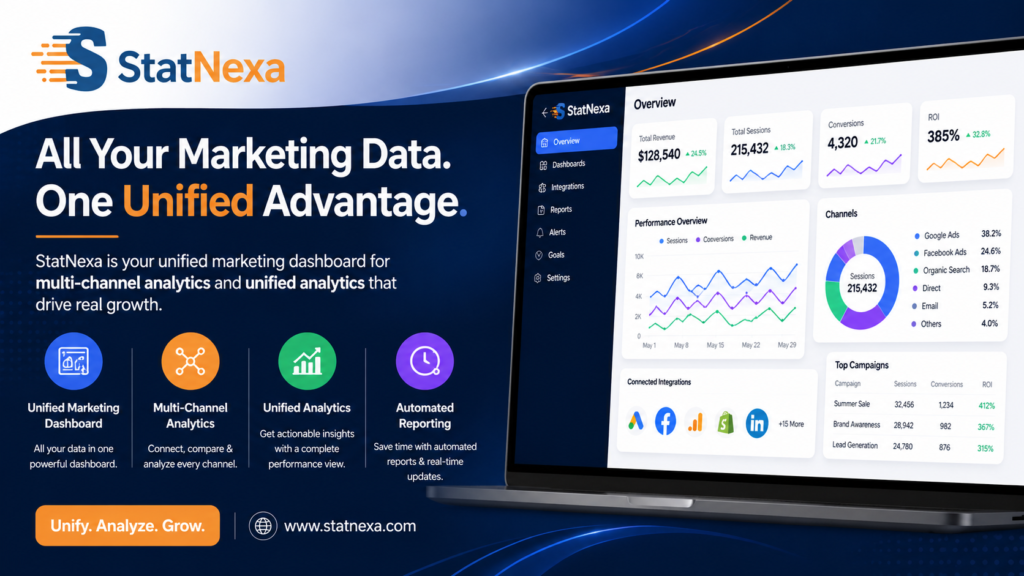
Marketing today is more complex than ever.
You’re running campaigns across Google Ads, social media, SEO tools, email platforms, CRMs, and analytics systems. Each platform generates valuable data, but it’s scattered.
The result?
- fragmented insights
- manual reporting
- slow decision-making
This is exactly where a unified marketing dashboard changes everything.
What is a Unified Marketing Dashboard?
A unified marketing dashboard is a centralized platform that brings together data from multiple marketing channels into one place.
Instead of analyzing each platform separately, you get a single, real-time view of your entire marketing performance.
This approach is part of a broader concept called unified analytics, where data from all sources is integrated to create a complete picture of performance.
Why Traditional Dashboards Fail
Most marketing teams still rely on:
- multiple tools
- spreadsheets
- disconnected dashboards
But this creates major problems:
1. Data silos
Each platform shows only part of the story.
2. No cross-channel visibility
You can’t see how campaigns influence each other.
3. Delayed insights
By the time reports are ready, the opportunity is gone.
Without a unified approach, key insights are lost across platforms.
What is Multi-Channel Analytics?
Multi-channel analytics (also called cross-channel analytics) is the process of combining data from different marketing channels to understand how they work together.
Instead of looking at:
- Facebook Ads
- Google Ads
- SEO
…individually, you analyze them as one system.
This helps answer critical questions like:
- Which channels drive real revenue?
- How do users move across touchpoints?
- What combination of channels converts best?
Cross-channel analytics creates a unified view of the customer journey, improving decision-making and ROI.
The Power of an All-in-One Marketing Dashboard
An all-in-one marketing dashboard takes multi-channel analytics a step further.
It doesn’t just combine data, it also:
- visualizes performance
- automates reporting
- provides actionable insights
A unified platform allows marketers to track campaigns, analyze performance, and optimize strategies from a single interface.
Key Benefits of Unified Analytics
1. One Source of Truth
Unified analytics consolidates all marketing data into a single system.
This eliminates confusion and ensures everyone works with the same metrics.
2. Better Decision-Making
With unified analytics, you can:
- identify high-performing channels
- optimize budgets
- scale winning campaigns
Unified data helps marketers understand which campaigns actually drive revenue, not just clicks.
3. Real-Time Insights
Modern marketing moves fast.
Unified analytics platforms allow you to:
- react instantly to performance changes
- identify trends early
- optimize campaigns in real time
This agility is critical in today’s competitive landscape.
4. Improved ROI
When you understand how channels work together, you can:
- allocate budget more effectively
- reduce wasted spend
- increase conversions
Unified marketing measurement provides a holistic view of campaign performance across channels, enabling better ROI optimization.
5. Time Savings Through Automation
Instead of building reports manually:
- dashboards update automatically
- reports are generated instantly
- teams save hours every week
Why Agencies Are Moving to Unified Marketing Dashboards
Modern agencies manage:
- multiple clients
- multiple campaigns
- multiple platforms
Without a unified system, scaling becomes impossible.
A unified marketing dashboard enables agencies to:
- monitor all clients from one place
- deliver real-time reports
- improve client transparency
- reduce operational overhead
How StatNexa Fits In
StatNexa is built as a unified marketing dashboard for agencies and marketing teams.
It brings together:
- advertising data
- SEO performance
- social media analytics
- website metrics
into a single, actionable view.
Instead of switching between tools, agencies can use StatNexa as their:
👉 all-in-one marketing dashboard
👉 multi-channel analytics platform
👉 unified analytics engine
Use Case: From Fragmented Data to Unified Insights
Before (Without Unified Dashboard)
- Google Ads → separate dashboard
- Facebook Ads → separate dashboard
- SEO → separate tool
- Reporting → manual
👉 Result: confusion + wasted time
After (With StatNexa)
- all data in one dashboard
- automated reporting
- real-time insights
👉 Result: clarity + faster decisions
The Future: From Reporting to Marketing Intelligence
The shift is clear:
Old way:
- reporting tools
- static dashboards
New way:
- unified analytics
- real-time insights
- marketing intelligence
Unified analytics transforms marketing from:
👉 reactive → predictive
👉 fragmented → integrated
👉 data-heavy → insight-driven
Final Thoughts
Marketing is no longer about tracking individual channels.
It’s about understanding how everything works together.
A unified marketing dashboard powered by multi-channel analytics is no longer optional, it’s essential.
If you want to:
- scale campaigns
- improve ROI
- save time
- deliver better client results
Then moving to an all-in-one marketing dashboard like StatNexa is the next step.
Ready to unify your marketing data? Explore StatNexa and turn your fragmented marketing data into clear, actionable insights and all in one place.